01
QR on the table
Each table has its own code. When the bill is closed, that link stops working and the next guest starts fresh.
 Cartadia
For restaurants in Spain
A guest scans, chooses their dishes, and the kitchen receives them in the order they arrive. The waiter serves. The bill closes when the table leaves.
01
Each table has its own code. When the bill is closed, that link stops working and the next guest starts fresh.
02
One person orders the set lunch at a fixed price. Another orders from the menu. Both sit on the same ticket.
03
A new dish from table 1 does not jump ahead of what table 2 was already waiting for.
At the table
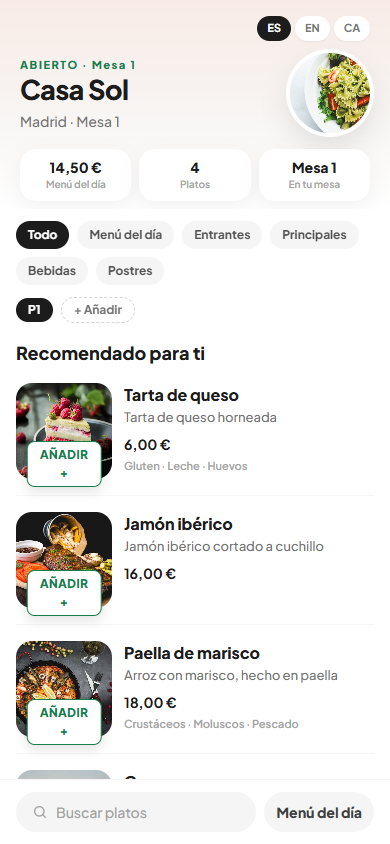
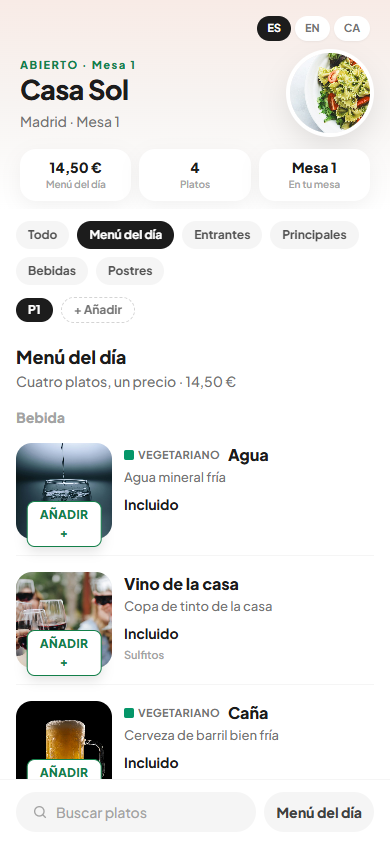
The menú del día shows a drink, a first course, a main and a dessert. What is included is clear. The à la carte menu shows its price, photo and allergens.
Each guest is their own. Someone who has already ordered can add another dish to their place, without opening another person.
In the restaurant
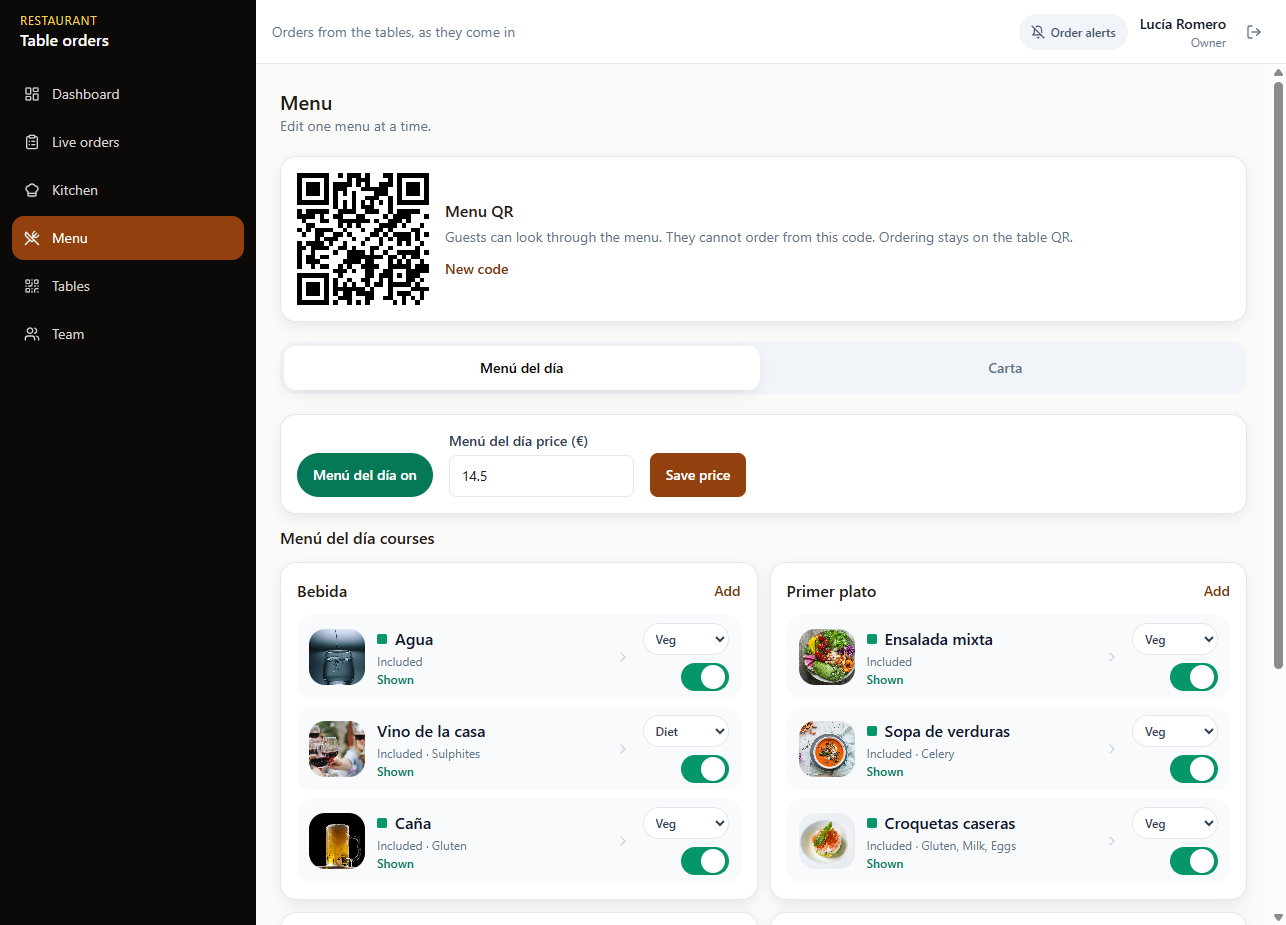
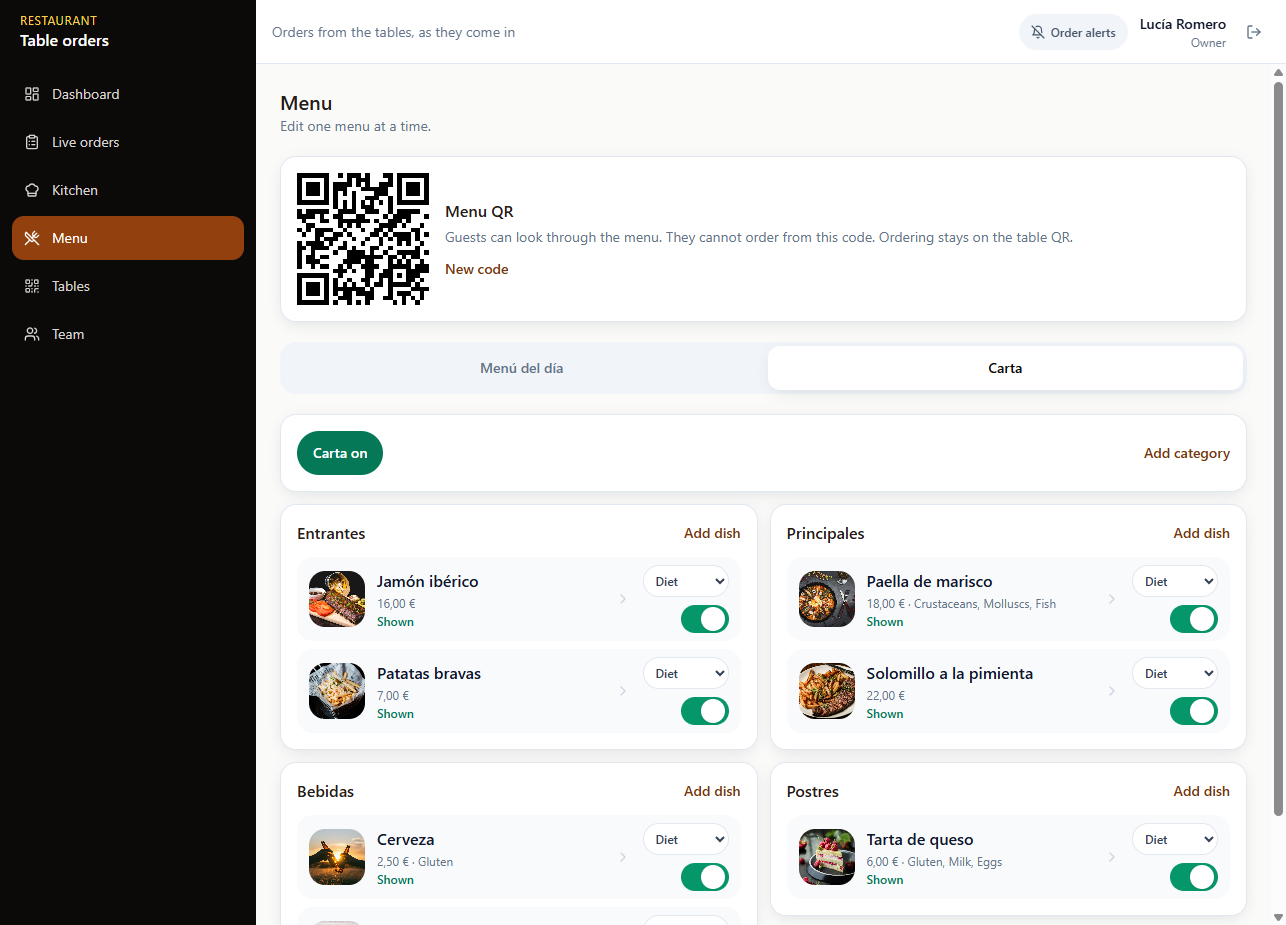
Menú del día and à la carte live on separate tabs, so each list loads on its own. The set price, each dish’s switch, and the vegetarian, non-vegetarian or vegan mark sit on the same row.
A QR just for looking
There is a code for anyone who wants to see what is on today. You cannot order from that code. The order comes from the QR on the table, and that code changes when the bill is closed.
The kitchen marks each dish ready. The waiter sees which are prepared and which have already been served. A dish that arrives later waits behind the ones already in the queue.